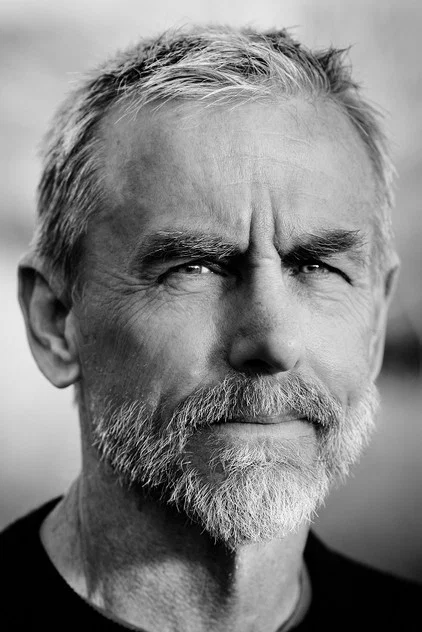

David Andrews is an accomplished actor whose career has spanned several decades, capturing the hearts of audiences with his memorable performances. Hailing from Baton Rouge, Louisiana, he initially embarked on a journey through academia, attending Louisiana State University. His interest in the law took him to prestigious institutions like Duke University and Stanford Law School. However, the allure of the acting world proved irresistible, leading him to pursue a career in film and television.
Andrews made a striking entrance into the film industry in 1984 with his role in the iconic horror classic A Nightmare on Elm Street. This early success opened doors for future projects, though the path was not without its challenges. It wasn’t until the late 1980s that he began to gain traction, ultimately achieving significant recognition in 1990 with his performance in Stephen King’s Graveyard Shift, a role that showcased his capability to embody intense and multifaceted characters.
The 1990s marked a prolific period for Andrews as he expanded his repertoire with a series of notable performances. His portrayal of James Earp in the critically acclaimed film Wyatt Earp, alongside Kevin Costner, illustrated his adeptness in historical narratives. The television series Mann & Machine further solidified his presence in the industry, as his character resonated with viewers.
In 1995, Andrews joined an ensemble cast in the space drama Apollo 13, featuring Tom Hanks, Kevin Bacon, and Bill Paxton. His role as astronaut Pete Conrad added significant depth to the film, contributing to its profound storytelling. This performance marked a pivotal moment in his career, establishing him as a versatile actor capable of tackling diverse roles.
The late ’90s saw Andrews return to the small screen, where he excelled in various television films, including Our Son, the Matchmaker and Switched at Birth. His participation in the cult classic Fight Club in 1999, where he shared the screen with Brad Pitt and Edward Norton, further highlighted his range and ability to engage with complex narratives.
As the new millennium approached, Andrews continued to diversify his acting portfolio with projects such as Navigating the Heart and the sequel to Hannibal. His performances during this time often explored challenging societal themes and the intricacies of human relationships, showcasing his depth as an artist.
In 2002, he appeared in A Walk to Remember, a film that allowed him to connect with audiences on an emotional level. The following year, he took on the role of Major General Gordon ‘Biff’ Cresswell in the final season of JAG, solidifying his television credentials. His portrayal of Scooter Libby in the 2010 film Fair Game further demonstrated his ability to engage with politically charged narratives.
David Andrews has undoubtedly left a lasting impression on the entertainment landscape. His extensive body of work reflects a dedication to his craft and a willingness to tackle diverse roles that challenge both him and his audience. As he continues to contribute to film and television, Andrews remains a respected figure, inspiring aspiring actors and enriching the tapestry of contemporary cinema.
David Andrews may not always be in the limelight, but his impactful performances have left a significant imprint on both film and television. His ability to seamlessly transition between genres and portray a wide range of characters speaks to his skill as an actor. Andrews’s work, especially in projects like Fight Club and A Walk to Remember, illustrates the depth he brings to every role. As audiences continue to appreciate his contributions, it is clear that his legacy will endure in the annals of cinematic history.
There are no projects categorized under this tab on our directory at the moment.


